
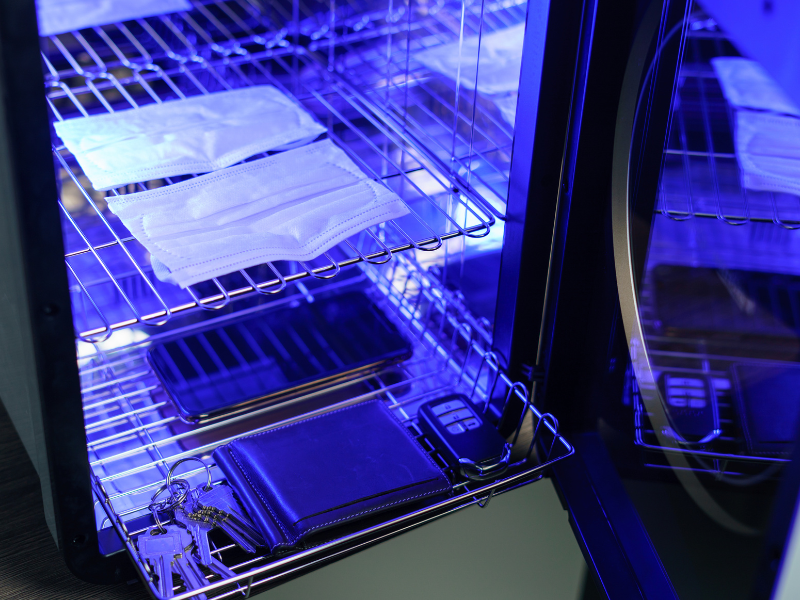
In today’s world, maintaining a clean and germ-free environment is more important than ever. While chemical cleaners play a role, a modern, highly effective, and chemical-free method is rapidly gaining popularity in homes, offices, and industries across Malaysia: UV-C LED Disinfection.
If you’ve heard the term but aren’t sure how it works, this guide will explain the science behind it, its applications, and why it’s a smart hygiene solution for Malaysian households and businesses.
1. What Exactly Is UV-C LED Disinfection?
UV-C LED disinfection is a cutting-edge sterilization method that uses a specific type of ultraviolet light to inactivate harmful microorganisms.
Understanding UV Light
The Sun emits three types of Ultraviolet (UV) light:
| UV Type | Wavelength | Common Effects | Relevance to Disinfection |
|---|---|---|---|
| UV-A | 315–400 nm | Tanning, skin aging | Not germicidal |
| UV-B | 280–315 nm | Sunburn | Limited germicidal effect |
| UV-C | 200–280 nm | Germicidal | Destroys bacteria, viruses, and fungi |
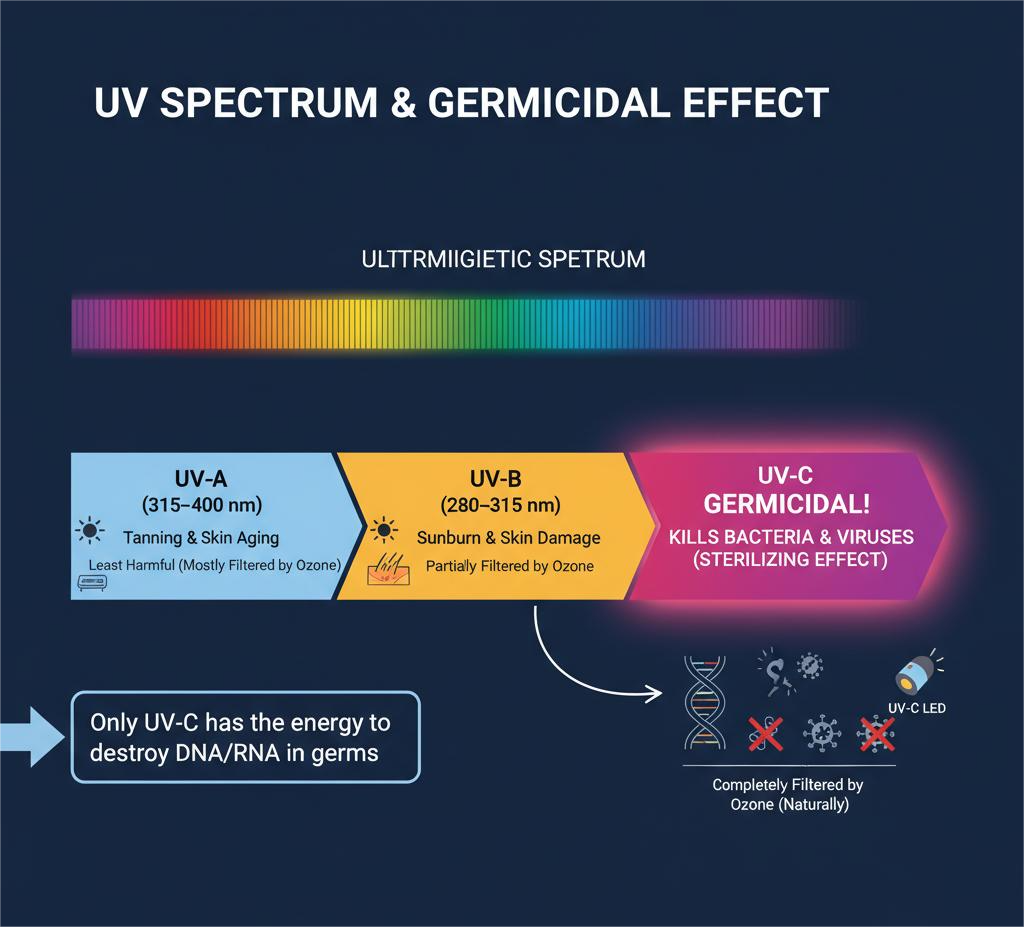
Tip: Most UV-C light from the sun is blocked by the Earth’s ozone layer, so artificial UV-C devices are used for disinfection.
The LED Difference
Traditional UV disinfection often uses mercury lamps. UV-C LED (Light Emitting Diode) technology is modern, eco-friendly, and energy-efficient. It precisely targets the germicidal UV-C wavelength, delivering powerful, concentrated disinfection without toxic materials.
2. How Does UV-C LED Disinfection Kill Germs?
Unlike chemical cleaning that physically removes dirt, UV-C light works at the genetic level.
The Mechanism: DNA & RNA Disruption
- Light Penetration: UV-C LED devices emit high-energy photons in the 260–270 nm range, the most effective germicidal zone.
- Targeting Genetic Material: UV-C energy penetrates the cell walls of microorganisms (bacteria, viruses, molds, fungi) and is absorbed by their DNA or RNA.
- Bond Formation (Dimerization): Absorbed energy causes chemical bonds to form between adjacent bases (like thymine) in the DNA/RNA strand.
- Inactivation: These new bonds scramble the genetic code. The microorganism cannot replicate, reproduce, or infect, rendering it harmless.
⚡ Essentially, UV-C light doesn’t kill microbes immediately; it genetically cripples them, preventing them from functioning or spreading.
3. Key Benefits of Using UV-C LED Technology
Switching to UV-C LED disinfection offers several advantages over traditional methods:
- Chemical-Free: No harsh chemicals, residues, or toxic fumes; safe for food areas and sensitive equipment.
- Highly Effective: Rapidly inactivates a wide spectrum of pathogens, including those resistant to chemical disinfectants.
- Eco-Friendly: Mercury-free and energy-efficient compared to traditional UV lamps.
- Instant Disinfection: Works within seconds or minutes depending on intensity.
- Low Maintenance: LED lights last significantly longer than traditional UV bulbs.
4. Versatile Applications of UV-C LED Disinfection in Malaysia
As hygiene awareness grows, UV-C LED Disinfection Malaysia is being adopted across multiple sectors:
| Application | Device Type | Key Benefit |
|---|---|---|
| Air Purification | HVAC systems / standalone purifiers | Reduces airborne pathogens, improves indoor air quality |
| Surface Disinfection | Wands, chambers, devices | Sterilizes high-touch surfaces like phones, keyboards, instruments |
| Water Treatment | Water dispensers / industrial chillers | Purifies drinking water, prevents bacterial growth |
5. Frequently Asked Questions (FAQ)
Is UV-C LED disinfection safe for people?
UV-C light is harmful to human skin and eyes. All certified UV-C LED devices in Malaysia include safety features like automatic shut-off sensors or protective enclosures to prevent direct exposure.
How is UV-C LED different from UV light used in tanning?
Tanning beds primarily use UV-A light (longer wavelength), whereas UV-C LED uses the shortest, germicidal wavelength, which is designed to inactivate microbes.
Can germs develop resistance to UV-C LED disinfection?
No. UV-C physically damages DNA/RNA, making it impossible for microbes to develop resistance, unlike chemical disinfectants.
6. Conclusion
UV-C LED Disinfection is a modern, effective, and environmentally friendly solution for maintaining clean environments in Malaysia. From homes and offices to hospitals and industrial sites, it provides fast, chemical-free, and reliable sterilization.
Looking for UV-C LED devices for your home or business? [Check our range of UV-C LED solutions in Malaysia]
Disclaimer
We hope you find this article helpful and informative. The content provided is for general informational purposes only and does not constitute professional advice or necessarily reflect the full range of services offered by T-Technic Engineering Sdn. Bhd.
For personalized guidance, please consult a qualified professional or contact us directly. While we strive for accuracy and completeness, we cannot guarantee that all content is error-free. T-Technic Engineering Sdn. Bhd. assumes no responsibility for any errors, omissions, or outcomes resulting from the use of this information.

